Malignant peritoneal mesothelioma is a rare type of mesothelioma which attacks the lining of abdomen also known as peritoneum. Malignant peritoneal mesothelioma (MPM) is a universally fatal disease affecting 20% to 30% of the mesothelioma cases. It's was first described by Miller and Wynn in the year 1908. According to the statistics, in the past two decades, the incidence of malignant peritoneal mesothelioma cancer has increased. Peritoneal mesothelioma affects the lining of the abdomen also known as peritoneum. The location of malignant cell is human's abdominal lining and because of that, MPM can sometimes known as abdominal mesothelioma. However, most common term used to describe this type of cancer is peritoneal mesothelioma. The main cause of MPM in humans is asbestos. Asbestos typically is the one of most commonly roofing materials since it is not only cheaper but is easy to fix on a roof. Asbestos exposure contributed to almost 70 to 80 percent of mesothelioma lung cancer. Humans come into contact with asbestos when they swallow or inhale the fibers. Asbestos inhalation may increase risk to develop asbestos related diseases, most importantly mesothelioma. Asbestos was completely banned in UK since it was recognized to be a serious health hazard, and it is now responsible for about 4000 deaths each year and many cases of serious disease. The people at increase risk of developing health asbestos related disease are those whose work brings them into direct contact with asbestos such as builders, heating engineers, roofers and demolition workers. In addition to mesothelioma, asbestos exposure will increase the risk of other health problems such as lung cancer, asbestosis (chronic lung ailment) and other type of cancer such as larynx and kidney cancer. Symptoms of Malignant Peritoneal Mesothelioma It can takes such a long time for cancer to develop the symptoms and sometimes may take up to 30 years, between exposure to asbestos and the start of the disease. Most common symptoms of the disease are abdominal pain, abdominal swelling, abnormal weight loss, anemia, easy fatigue, nausea and vomiting. Abdominal pain and swelling result from fluid accumulation in the abdominal cavity. Other than that, people can easily get fever when the disease starts to shows its symptoms. Among the symptoms stated above, abdominal pain is the most common reported initial symptoms of MPM. Unexplained night sweats and blood coagulation problems are less frequent symptoms occurring when the cancer develops. If the cancer cells spread to the other part of the body, the symptoms may lead to trouble swallowing or swelling of the neck and face. Diagnosis of Abdominal Mesothelioma It is very difficult to diagnose peritoneal mesothelioma since there is no defined system so far that can differentiate the stages of the development of cancerous tumor cells. If required, TNM staging system normally used to detect the cancer in stages. Other than that, Serum mesothelin-related protein (SMRP) may be a potentially useful serum marker used to diagnose and to follow-up the cancer progression. Computer tomography (CT) findings may be a useful tool in detection and characterization of peritoneal mass. Malignant Peritoneal Mesothelioma is a deadly neoplasm. MPM's diagnosis is difficult to perform since the symptoms will take a long time to show up. Early detection is the key in peritoneal mesothelioma treatment since the cancer cell normally spread very fast. Peritoneal Mesothelioma can be regarded as a very dangerous cancer among other cancer.However we can prevent this problems from occur to you and your family. As i said before, early detection is the key of peritoneal mesothelioma treatment [http://peritonealmesotheliomatreatment.com/] success since the cancer cell spread very fast. Get your free update's information about mesothelioma especially mesothelioma treatment by click > mesothelioma [http://mesotheliomatreatmentnews.com/] Article Source: https://EzineArticles.com/expert/Lan_Sipenyair/912820 Article Source: http://EzineArticles.com/6234654

What is Mesothelioma Caused by Bacteria

Exposure to toxic asbestos fibers can lead to deadly diseases like mesothelioma, lung cancer, asbestosis and pleural thickening.

How Does Asbestos Cause Cancer?

In order to understand how asbestos fibers cause cancer, it is necessary to understand what cancer is and how cancerous cells affect the body. When a person develops cancer, healthy cell division is affected whereby the growth of cancerous cells is made possible.

Understanding Cancer Basics

  • Cancer Affects Everyone Differently

    Each patient is unique, and their body handles the effects of cancer, and cancerous cell growth, differently. This is why it is imperative to see a mesothelioma specialistAll types of cancer do have one thing in common: abnormal cell growth.
  • Carcinogens and Cancer

    Carcinogens, like asbestos, are any substance which can lead to the spread of cancerous cells in the body. Abnormal cell growth usually occurs as the result of healthy cells becoming damaged as a result of a carcinogen.
  • DNA Mutation

    Carcinogens mutate a person’s DNA, which in turn cause the abnormal production of cells. As in the case of mesothelioma, it may take years for a carcinogen to have an affect on cell production.

Healthy Cell Division
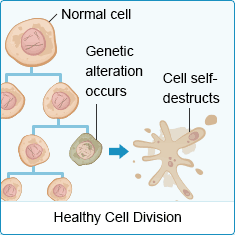
Healthy Cell DivisionHealthy cell division can be affected by a person’s heredity or by carcinogens. Mesothelioma is strictly caused by carcinogens. Understanding the behavior of healthy cells can shed light on how asbestos disrupts this process.
Normal cells grow through a cell division process known as mitosis. During this process, a cell divides into two different cells with identical sets of genetic material, known as DNA. This is how cells reproduce. Normal cellular growth stops after division occurs a certain number of times because they are programmed to do so.
Somatic cells (non-reproductive) usually divide about 50 or 60 times. Once cells reach this limit, cells undergo a process called apoptosis, which is basically cellular suicide. This whole process, from the first cell division to apoptosis, is called senescence.
In order to control the number of cells being generated, healthy cells signal each other using tiny protein molecules called cytokines. These are produced by cells in the immune system. They allow cells to communicate with each other to regulate cell production. Simply put, they tell cells to produce more cells when there are too few cells and slow down production when the number of cells gets too high.


Cancer Development
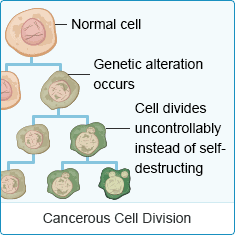
Cancerous Cell DivisionCancerous cells do not do follow the same process as healthy cells. They do not submit to senescence or apoptosis. Cancer cells are not capable of communicating with other cells, and as a result they never receive chemical signals to slow down growth.
Cancer cells lose the sensitivity to the anti-growth hormones. The combination of uncontrollable cell division and lack of apoptosis results in dangerous tumor growth. This is also why tumors can grow back after they are removed and cancer can come out of remission.
Cancer begins when the DNA in certain cells mutates, affecting normal cellular division and lack of communication between cells. This mutation is caused by carcinogens, which are any substance known to directly alter cellular production (senescence) or damage genetic material.
Once mutation occurs, these cells continue dividing. However, the means to communicate between cells is disrupted, causing unchecked cell growth. Furthermore, these cells no longer undergo apoptosis. The result is the continuous division of cells that take over healthy cells.

Development of Mesothelioma
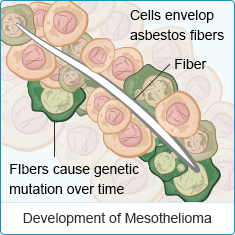
Development of Mesothelioma CellsMesothelioma develops in the same way. What sets it apart from other cancers is the carcinogen involved, asbestos. Tiny asbestos fibers lodge themselves into the lining of the lung. When the body cannot expel the fibers, the cells that make up the mesothelium envelop the fibers in an attempt to protect the body from the foreign particles.
This is a process known as phagocytosis. Phagocytosis functions as immune support from not only foreign particles, but also bacteria and dead cells. This leads to the development of scar tissue and the genetic mutation of the healthy cells encasing the fibers of asbestos.
Eventually, the DNA in the cells is altered by the asbestos fibers, and the healthy cells become cancerous and begin to grow. These fibers also cause scarring and inflammation. The irritation from the inflammation of the lungs can cause chest pain. The buildup of scar tissue prevents the lung from expanding fully, which causes difficulty breathing.
Treatment options to manage these symptoms and improve prognosis are getting better all the time. As a patient, it is important to find an experienced specialist who can explain all your options. Get connected to a mesothelioma specialist using our free Doctor Match program.

Non-Small Cell Lung Cancer

Unsurprisingly, asbestos can also lead to lung cancer. The lung cancer caused by asbestos is not the same type of cancer as mesothelioma, but it causes it the same way. When asbestos fibers are inhaled, they can also cause mutations in the cells of the actual lung tissue.
Asbestos-related lung cancers account for about 4% of all lung cancers. This cancer affects the lining of the lungs, much like mesothelioma. The latency period for this cancer is the same as mesothelioma, about 20-40 years. Many studies show lung cancer can be detected between 30-35 years after the initial exposure to asbestos.
Those who are exposed to asbestos have a far higher chance of developing lung cancer if they smoke. Smoking weakens the cilia, which are responsible for cleaning the lungs. When asbestos fibers enter the lungs, the cilia cannot clean the fibers out as efficiently.
There are different types of non-small cell lung cancer:
  • Squamous Cell Carcinoma
    Cancer that begins in the squamous cells and the larger bronchi
  • Large Cell Carcinoma
    Affects the larger cells in the outer regions of the lungs
  • Adenocarcinoma
    Affects the outer regions of the lungs and is most prominent in women and non-smokers
Treatment options for non-small cell lung cancer are similar to surgeries for mesothelioma. Patients with NSCLC can be treated with a pneumonectomy (entire lung removal), a lobectomy (entire lobe is removed), or a wedge section (part of the lobe is removed). Chemotherapy and radiation are frequently used on patients with non-small cell lung cancer.

Asbestosis

Asbestosis is a non-cancerous infection of the lungs that progresses slowly and makes breathing more difficult. Although it is caused by asbestos exposure, it is not the same as mesothelioma.
Asbestosis patients have 10 times a higher risk of developing asbestos-related lung cancer than those without asbestosis. Scar tissue begins to build up with constant irritation from the asbestos fibers. The scarring makes it difficult to breathe and harder for oxygen and carbon dioxide to absorb through the lungs.
Those who come in direct contact with asbestos materials are not the only ones affected. Fifty percent of diagnoses among women occurred because of secondary exposure. Secondary exposure is common among children, spouses, and friends of those that work with asbestos. It can also happen in a community setting, in towns where asbestos was mined or present. Symptoms of asbestosis may include:
  • Shortness of Breath
  • Chest Pain
  • Persistent Cough with Mucus
  • Loss of Appetite
  • Crackling Sound when Inhaling
Treatment for asbestosis focuses on preventing the progression of the illness and relieving the symptoms. Patients are given an inhaler or oxygen tank to help them breathe easier. Patients with extreme symptoms may be eligible for a lung transplant. Learn more about asbestosis and its relationship to mesothelioma in our free Mesothelioma Guide.

Pleural Thickening and Pleuritis

Pleural thickening occurs as a result of built up scar tissue. When asbestos fibers are inhaled, they cause scarring on the pleura. The scarring causes inflammation and this inflammation can cause symptoms similar to rheumatoid arthritis.
Pleuritis can also result from asbestos exposure. This condition, also known as pleurisy, is a general term for inflammation of the lining of the lungs. Pleuritis is one of the causes of pain associated with mesothelioma.
Treatment for pleural thickening or pleuritis may be limited depending on the severity of the condition. Pleurectomy is an option for patients faced with pleural thickening. By removing the pleura, the lung can expand properly and discomfort from breathing is relieved.

Risk Factors

Various risk factors determine how asbestos affects an individual. A person’s reaction to asbestos depends on how long they were exposed and the concentration of the asbestos fibers. The type of asbestos a person is exposed to can influence how disease may develop.
Smoking also increases the complications of lung cancer caused by asbestos, but it does not have a direct relationship to the development of mesothelioma.
People are more prone to develop asbestos related diseases when they are exposed to higher concentrations of asbestos for longer periods of time and when there is a higher frequency of the exposure. Most cases of lung cancer and asbestosis occurred 15 or more years after initial exposure. Mesothelioma cases tended to occur 30 years or more after the first exposure.
Occupational asbestos exposure is often the greatest risk factor that leads to mesothelioma. This is supported by examining the incidence of mesothelioma. Mesothelioma incidence is far higher among men who were more likely to work in trade occupations that relied on asbestos. The incidences of mesothelioma are also more common amongst older men because of the latency period.
Occupational exposure in military service also leads to a large percentage of mesothelioma cases. For a long time, asbestos was prevalent through all the branches of the military for its insulating properties and affordability. Both men and women veterans have a higher incidence of mesothelioma than those who never served in the military because they were exposed to asbestos on a virtual daily basis. Learn more about veteran-specific treatment and benefits in our free Veteran’s Support Guide.
Most patients weren’t aware of the risk factors that caused their mesothelioma when they were exposed to asbestos. This is why there are several methods of compensation to support these patients. Learn more about getting mesothelioma compensation.

https://www.mesotheliomaguide.com/mesothelioma/causes/asbestos-and-cancer/

COMMENTS

Malignant peritoneal mesothelioma is a rare type of mesothelioma which attacks the lining of abdomen also known as peritoneum. Malignant peritoneal mesothelioma (MPM) is a universally fatal disease affecting 20% to 30% of the mesothelioma cases. It's was first described by Miller and Wynn in the year 1908. According to the statistics, in the past two decades, the incidence of malignant peritoneal mesothelioma cancer has increased. Peritoneal mesothelioma affects the lining of the abdomen also known as peritoneum. The location of malignant cell is human's abdominal lining and because of that, MPM can sometimes known as abdominal mesothelioma. However, most common term used to describe this type of cancer is peritoneal mesothelioma. The main cause of MPM in humans is asbestos. Asbestos typically is the one of most commonly roofing materials since it is not only cheaper but is easy to fix on a roof. Asbestos exposure contributed to almost 70 to 80 percent of mesothelioma lung cancer. Humans come into contact with asbestos when they swallow or inhale the fibers. Asbestos inhalation may increase risk to develop asbestos related diseases, most importantly mesothelioma. Asbestos was completely banned in UK since it was recognized to be a serious health hazard, and it is now responsible for about 4000 deaths each year and many cases of serious disease. The people at increase risk of developing health asbestos related disease are those whose work brings them into direct contact with asbestos such as builders, heating engineers, roofers and demolition workers. In addition to mesothelioma, asbestos exposure will increase the risk of other health problems such as lung cancer, asbestosis (chronic lung ailment) and other type of cancer such as larynx and kidney cancer. Symptoms of Malignant Peritoneal Mesothelioma It can takes such a long time for cancer to develop the symptoms and sometimes may take up to 30 years, between exposure to asbestos and the start of the disease. Most common symptoms of the disease are abdominal pain, abdominal swelling, abnormal weight loss, anemia, easy fatigue, nausea and vomiting. Abdominal pain and swelling result from fluid accumulation in the abdominal cavity. Other than that, people can easily get fever when the disease starts to shows its symptoms. Among the symptoms stated above, abdominal pain is the most common reported initial symptoms of MPM. Unexplained night sweats and blood coagulation problems are less frequent symptoms occurring when the cancer develops. If the cancer cells spread to the other part of the body, the symptoms may lead to trouble swallowing or swelling of the neck and face. Diagnosis of Abdominal Mesothelioma It is very difficult to diagnose peritoneal mesothelioma since there is no defined system so far that can differentiate the stages of the development of cancerous tumor cells. If required, TNM staging system normally used to detect the cancer in stages. Other than that, Serum mesothelin-related protein (SMRP) may be a potentially useful serum marker used to diagnose and to follow-up the cancer progression. Computer tomography (CT) findings may be a useful tool in detection and characterization of peritoneal mass. Malignant Peritoneal Mesothelioma is a deadly neoplasm. MPM's diagnosis is difficult to perform since the symptoms will take a long time to show up. Early detection is the key in peritoneal mesothelioma treatment since the cancer cell normally spread very fast. Peritoneal Mesothelioma can be regarded as a very dangerous cancer among other cancer.However we can prevent this problems from occur to you and your family. As i said before, early detection is the key of peritoneal mesothelioma treatment [http://peritonealmesotheliomatreatment.com/] success since the cancer cell spread very fast. Get your free update's information about mesothelioma especially mesothelioma treatment by click > mesothelioma [http://mesotheliomatreatmentnews.com/] Article Source: https://EzineArticles.com/expert/Lan_Sipenyair/912820 Article Source: http://EzineArticles.com/6234654
Loading...
Nama

Breast Cancer,8,Breast Cancer Symptoms,7,Cancer Disease,2,Cancer Symptoms,1,Lung Cancer,3,Mesothelioma Cancer,14,Mesothelioma Lung Cancer,11,Symptoms of Lung Cancer,3,Testicular Cancer,2,Testicular Cancer Signs,2,
ltr
item
Nasional 2017: What is Mesothelioma Caused by Bacteria
What is Mesothelioma Caused by Bacteria
https://www.mesotheliomaguide.com/wp-content/uploads/2013/08/ct-phase1.png
Nasional 2017
https://nasional2017.blogspot.com/2017/10/what-is-mesothelioma-caused-by-bacteria.html
https://nasional2017.blogspot.com/
http://nasional2017.blogspot.com/
http://nasional2017.blogspot.com/2017/10/what-is-mesothelioma-caused-by-bacteria.html
true
7843630497861104268
UTF-8
Loaded All Posts Not found any posts VIEW ALL Readmore Reply Cancel reply Delete By Home PAGES POSTS View All RECOMMENDED FOR YOU LABEL ARCHIVE SEARCH ALL POSTS Not found any post match with your request Back Home Sunday Monday Tuesday Wednesday Thursday Friday Saturday Sun Mon Tue Wed Thu Fri Sat January February March April May June July August September October November December Jan Feb Mar Apr May Jun Jul Aug Sep Oct Nov Dec just now 1 minute ago $$1$$ minutes ago 1 hour ago $$1$$ hours ago Yesterday $$1$$ days ago $$1$$ weeks ago more than 5 weeks ago Followers Follow THIS CONTENT IS PREMIUM Please share to unlock Copy All Code Select All Code All codes were copied to your clipboard Can not copy the codes / texts, please press [CTRL]+[C] (or CMD+C with Mac) to copy