Malignant peritoneal mesothelioma is a rare type of mesothelioma which attacks the lining of abdomen also known as peritoneum. Malignant peritoneal mesothelioma (MPM) is a universally fatal disease affecting 20% to 30% of the mesothelioma cases. It's was first described by Miller and Wynn in the year 1908. According to the statistics, in the past two decades, the incidence of malignant peritoneal mesothelioma cancer has increased. Peritoneal mesothelioma affects the lining of the abdomen also known as peritoneum. The location of malignant cell is human's abdominal lining and because of that, MPM can sometimes known as abdominal mesothelioma. However, most common term used to describe this type of cancer is peritoneal mesothelioma. The main cause of MPM in humans is asbestos. Asbestos typically is the one of most commonly roofing materials since it is not only cheaper but is easy to fix on a roof. Asbestos exposure contributed to almost 70 to 80 percent of mesothelioma lung cancer. Humans come into contact with asbestos when they swallow or inhale the fibers. Asbestos inhalation may increase risk to develop asbestos related diseases, most importantly mesothelioma. Asbestos was completely banned in UK since it was recognized to be a serious health hazard, and it is now responsible for about 4000 deaths each year and many cases of serious disease. The people at increase risk of developing health asbestos related disease are those whose work brings them into direct contact with asbestos such as builders, heating engineers, roofers and demolition workers. In addition to mesothelioma, asbestos exposure will increase the risk of other health problems such as lung cancer, asbestosis (chronic lung ailment) and other type of cancer such as larynx and kidney cancer. Symptoms of Malignant Peritoneal Mesothelioma It can takes such a long time for cancer to develop the symptoms and sometimes may take up to 30 years, between exposure to asbestos and the start of the disease. Most common symptoms of the disease are abdominal pain, abdominal swelling, abnormal weight loss, anemia, easy fatigue, nausea and vomiting. Abdominal pain and swelling result from fluid accumulation in the abdominal cavity. Other than that, people can easily get fever when the disease starts to shows its symptoms. Among the symptoms stated above, abdominal pain is the most common reported initial symptoms of MPM. Unexplained night sweats and blood coagulation problems are less frequent symptoms occurring when the cancer develops. If the cancer cells spread to the other part of the body, the symptoms may lead to trouble swallowing or swelling of the neck and face. Diagnosis of Abdominal Mesothelioma It is very difficult to diagnose peritoneal mesothelioma since there is no defined system so far that can differentiate the stages of the development of cancerous tumor cells. If required, TNM staging system normally used to detect the cancer in stages. Other than that, Serum mesothelin-related protein (SMRP) may be a potentially useful serum marker used to diagnose and to follow-up the cancer progression. Computer tomography (CT) findings may be a useful tool in detection and characterization of peritoneal mass. Malignant Peritoneal Mesothelioma is a deadly neoplasm. MPM's diagnosis is difficult to perform since the symptoms will take a long time to show up. Early detection is the key in peritoneal mesothelioma treatment since the cancer cell normally spread very fast. Peritoneal Mesothelioma can be regarded as a very dangerous cancer among other cancer.However we can prevent this problems from occur to you and your family. As i said before, early detection is the key of peritoneal mesothelioma treatment [http://peritonealmesotheliomatreatment.com/] success since the cancer cell spread very fast. Get your free update's information about mesothelioma especially mesothelioma treatment by click > mesothelioma [http://mesotheliomatreatmentnews.com/] Article Source: https://EzineArticles.com/expert/Lan_Sipenyair/912820 Article Source: http://EzineArticles.com/6234654

What is Mesothelioma Disease Life Expectancy

Mesothelioma Life Expectancy

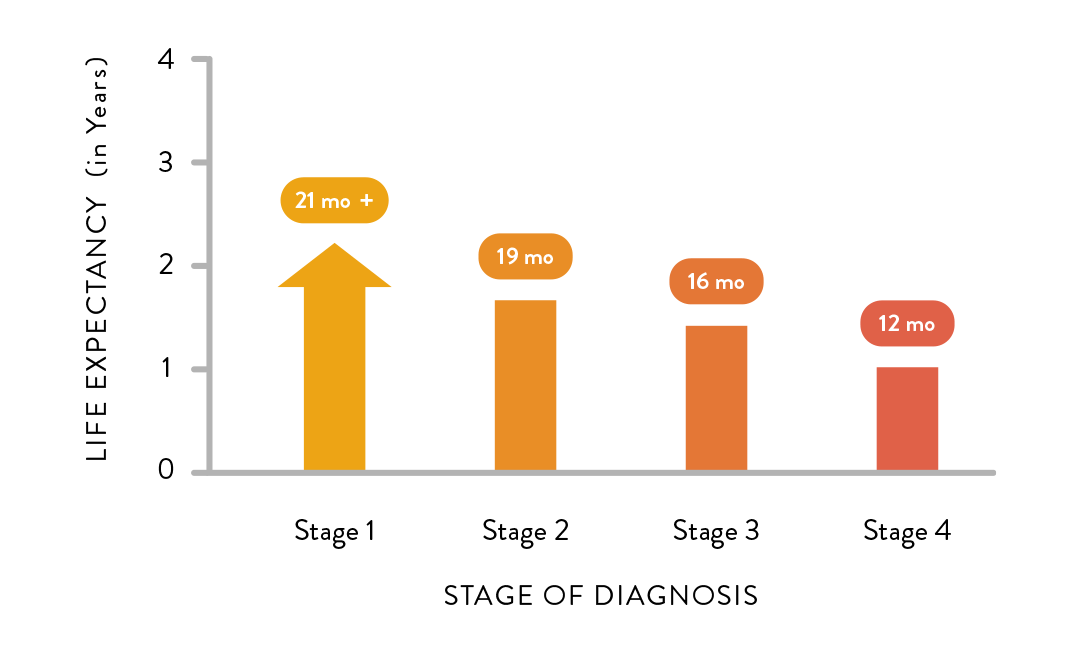
Average life expectancy for mesothelioma patients is 12 to 21 months. How long a patient lives depends on several factors including age, stage of the disease, and overall health. Approximately 40 percent of patients live past one year; 9 percent live longer than 5 years.
Malignant mesothelioma is an aggressive form of cancer whose symptoms typically don’t show up until later stages. Therefore, life expectancy for mesothelioma patients is generally short, especially without treatment.
Life expectancy varies significantly from patient to patient based on a number of individual factors and circumstances. Long-term survival is extremely rare, with fewer than 10 percent of patients living beyond 5 years. Early detection and quality health care are the most important factors in improving one's prognosis.

Factors Affecting Life Expectancy

The life expectancy of a mesothelioma patient is a complex thing to determine, as it depends on a variety of factors.

Stage

An early diagnosis can improve life expectancy significantly. When diagnosed at an early stage (Stage I or Stage II), there is little or no spreading, and treatments are likely to be more effective. However, at Stages III and IV the mesothelioma has expanded beyond the initial location, which makes treatment more difficult.
Mesothelioma Life Expectancy by Stage

Mesothelioma Location

Another big factor that can affect life expectancy is where the mesothelioma develops. Historically, patients with pleural mesothelioma have had a slightly longer life expectancy than those with peritoneal mesothelioma, while patients diagnosed with peritoneal mesothelioma have a very short life expectancy. However, in recent years, the life expectancy of patients diagnosed with peritoneal mesothelioma has improved, due to the development of more effective treatments.

Patient Age

Generally, older mesothelioma patients have shorter life expectancies, mostly because they are in poorer health and the disease is likely to be at a later stage. One study showed that individuals diagnosed with pleural mesothelioma before the age of 65 lived almost 4 months longer than those diagnosed at age 65, and more than 8 months longer than those diagnosed at age 75 or older.
Pleural Mesothelioma Life Expectancy
by Age at Diagnosis
Up to 65 years12 months
65+ years8 months
75+ years< 4 months

Cell Type

Mesothelioma can be categorized into three different cell types: epithelioid, sarcomatoid, and biphasic (a mixture of both epithelioid and sarcomatoid cells). Typically, those with epithelioid mesothelioma have a significantly longer life expectancy than those with sarcomatoid mesothelioma, while those with biphasic mesothelioma have a life expectancy in-between.
Life Expectancy by Mesothelioma Cell TypeLife Expectancy by Mesothelioma Cell Type
PleuralPleuralPeritonealPeritoneal
Epithelioid Epithelioid19 months54 months
Biphasic Biphasic13 months4.6 months
Sarcomatoid Sarcomatoid8 monthsNot enough data

Patient’s Sex

Fewer women have mesothelioma than men, mostly due to occupational differences and risk of asbestos exposure, and life expectancy in women diagnosed with mesothelioma tends to be longer than for men. In general, women diagnosed with mesothelioma live about 5.5 months longer than men with mesothelioma.

Resources for Mesothelioma Patients and Their Families

Other Factors Affecting Mesothelioma Life Expectancy

Many other factors can go into determining a patient’s life expectancy, from overall health of the individual to gender to certain genetic factors. The table below provides a list of things that can affect life expectancy positively and negatively.
Positive FactorsNegative Factors
No history of smokingHistory of smoking
Normal white blood cell countElevated white blood cell count
Low hemoglobin levelHigh hemoglobin level
Low platelet countHigh platelet count
No symptomsSymptoms present
How these factors affect life expectancy can vary significantly from individual to individual.

Life Expectancy and Mesothelioma Treatment

Patients diagnosed with early-stage mesothelioma may be eligible for an aggressive treatment program, such as involving surgical removal of the tumor combined with chemotherapy or radiation. The surgery is an extensive procedure, so the patient must be in generally good health and not advanced in age.
Patients who can withstand such aggressive treatments often have a better life expectancy and a change at long-term survival beyond five years. When developing a treatment program, the oncologist will assess the patient’s health and ability to undergo such treatments.

Speak with a MESOTHELIOMA SURVIVOR

Von St. James Family
Coordinate a time to speak with Heather Von St. James.

Learn Firsthand About:

  • Heather’s Amazing Story
  • Dr. David Sugarbaker’s Successful Treatment Approach
  • Life After Surviving a Mesothelioma Diagnosis
  • Coping Strategies for Patients & Family Members

Costs and Life Expectancy

From diagnosis to treatment, the medical bills can add up quickly – and for those who have longer life expectancies, the costs of follow-up visits, continued medications, and other ongoing expenses will build over time. Furthermore, many people with mesothelioma are unable to work, making it that much harder to pay for tests and treatments.
If you or a loved one has been diagnosed with mesothelioma, learn more about what financial assistance is available.

https://www.mesothelioma.com/mesothelioma/prognosis/life-expectancy.htm

COMMENTS

Malignant peritoneal mesothelioma is a rare type of mesothelioma which attacks the lining of abdomen also known as peritoneum. Malignant peritoneal mesothelioma (MPM) is a universally fatal disease affecting 20% to 30% of the mesothelioma cases. It's was first described by Miller and Wynn in the year 1908. According to the statistics, in the past two decades, the incidence of malignant peritoneal mesothelioma cancer has increased. Peritoneal mesothelioma affects the lining of the abdomen also known as peritoneum. The location of malignant cell is human's abdominal lining and because of that, MPM can sometimes known as abdominal mesothelioma. However, most common term used to describe this type of cancer is peritoneal mesothelioma. The main cause of MPM in humans is asbestos. Asbestos typically is the one of most commonly roofing materials since it is not only cheaper but is easy to fix on a roof. Asbestos exposure contributed to almost 70 to 80 percent of mesothelioma lung cancer. Humans come into contact with asbestos when they swallow or inhale the fibers. Asbestos inhalation may increase risk to develop asbestos related diseases, most importantly mesothelioma. Asbestos was completely banned in UK since it was recognized to be a serious health hazard, and it is now responsible for about 4000 deaths each year and many cases of serious disease. The people at increase risk of developing health asbestos related disease are those whose work brings them into direct contact with asbestos such as builders, heating engineers, roofers and demolition workers. In addition to mesothelioma, asbestos exposure will increase the risk of other health problems such as lung cancer, asbestosis (chronic lung ailment) and other type of cancer such as larynx and kidney cancer. Symptoms of Malignant Peritoneal Mesothelioma It can takes such a long time for cancer to develop the symptoms and sometimes may take up to 30 years, between exposure to asbestos and the start of the disease. Most common symptoms of the disease are abdominal pain, abdominal swelling, abnormal weight loss, anemia, easy fatigue, nausea and vomiting. Abdominal pain and swelling result from fluid accumulation in the abdominal cavity. Other than that, people can easily get fever when the disease starts to shows its symptoms. Among the symptoms stated above, abdominal pain is the most common reported initial symptoms of MPM. Unexplained night sweats and blood coagulation problems are less frequent symptoms occurring when the cancer develops. If the cancer cells spread to the other part of the body, the symptoms may lead to trouble swallowing or swelling of the neck and face. Diagnosis of Abdominal Mesothelioma It is very difficult to diagnose peritoneal mesothelioma since there is no defined system so far that can differentiate the stages of the development of cancerous tumor cells. If required, TNM staging system normally used to detect the cancer in stages. Other than that, Serum mesothelin-related protein (SMRP) may be a potentially useful serum marker used to diagnose and to follow-up the cancer progression. Computer tomography (CT) findings may be a useful tool in detection and characterization of peritoneal mass. Malignant Peritoneal Mesothelioma is a deadly neoplasm. MPM's diagnosis is difficult to perform since the symptoms will take a long time to show up. Early detection is the key in peritoneal mesothelioma treatment since the cancer cell normally spread very fast. Peritoneal Mesothelioma can be regarded as a very dangerous cancer among other cancer.However we can prevent this problems from occur to you and your family. As i said before, early detection is the key of peritoneal mesothelioma treatment [http://peritonealmesotheliomatreatment.com/] success since the cancer cell spread very fast. Get your free update's information about mesothelioma especially mesothelioma treatment by click > mesothelioma [http://mesotheliomatreatmentnews.com/] Article Source: https://EzineArticles.com/expert/Lan_Sipenyair/912820 Article Source: http://EzineArticles.com/6234654
Loading...
Nama

Breast Cancer,8,Breast Cancer Symptoms,7,Cancer Disease,2,Cancer Symptoms,1,Lung Cancer,3,Mesothelioma Cancer,14,Mesothelioma Lung Cancer,11,Symptoms of Lung Cancer,3,Testicular Cancer,2,Testicular Cancer Signs,2,
ltr
item
Nasional 2017: What is Mesothelioma Disease Life Expectancy
What is Mesothelioma Disease Life Expectancy
https://www.mesothelioma.com/images/layout/resource_icon-charts.svg
Nasional 2017
https://nasional2017.blogspot.com/2017/10/what-is-mesothelioma-disease-life.html
https://nasional2017.blogspot.com/
http://nasional2017.blogspot.com/
http://nasional2017.blogspot.com/2017/10/what-is-mesothelioma-disease-life.html
true
7843630497861104268
UTF-8
Loaded All Posts Not found any posts VIEW ALL Readmore Reply Cancel reply Delete By Home PAGES POSTS View All RECOMMENDED FOR YOU LABEL ARCHIVE SEARCH ALL POSTS Not found any post match with your request Back Home Sunday Monday Tuesday Wednesday Thursday Friday Saturday Sun Mon Tue Wed Thu Fri Sat January February March April May June July August September October November December Jan Feb Mar Apr May Jun Jul Aug Sep Oct Nov Dec just now 1 minute ago $$1$$ minutes ago 1 hour ago $$1$$ hours ago Yesterday $$1$$ days ago $$1$$ weeks ago more than 5 weeks ago Followers Follow THIS CONTENT IS PREMIUM Please share to unlock Copy All Code Select All Code All codes were copied to your clipboard Can not copy the codes / texts, please press [CTRL]+[C] (or CMD+C with Mac) to copy